Average Reviews:

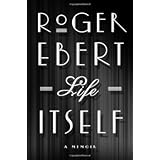
(More customer reviews)Are you looking to buy Life Itself: A Memoir? Here is the right place to find the great deals. we can offer discounts of up to 90% on Life Itself: A Memoir. Check out the link below:
>> Click Here to See Compare Prices and Get the Best Offers
Life Itself: A Memoir ReviewThis memoir opens as though someone had created a set, arranged the lights, positioned actors, and yelled "Action!" Ebert is three years old, sensing the motions of parents, aunts, uncles and extended family, reacting to various stimuli, seemingly aware, even at this age, the cameras are rolling.The book has a lot in common with the Gunther Grass novel The Tin Drum, as Ebert recalls his early years, then in vivid detail, matinee afternoons with his parents watching the Marx Brothers hit, A Day At The Races, Gentlemen Prefer Blondes, and one of the first 3D films, Bwana Devil. Early screen heroes were Whip Wilson and Lash LaRue, characters who carried guns but didn't need them because they also carried whips and could slash a pistol from your grip before you could aim it. He remembers the ubiquitous aroma of popcorn, the high movie house ceilings, and girls with rolls of Necco wafers.
Then came college, 1963, the year Dick Butkus and Jim Grabowski led the University of Illinois to the Rose Bowl. "I became friendly with a voluptuous woman under a grey woolen blanket. In the middle of the night, rocking through the midlands, we made free with each other." He had fun, but also vigorous preparation, working for the Daily Illini newspaper with its Associated Press affiliation, spending hours setting hot lead Linotype, and reading the voluminous novels of Thomas Wolfe.
One of Ebert's transcendent skills has always been the interview, and the book is full of them - John Wayne, Lee Marvin, Woody Allen and the enigmatic Igmar Bergman are represented, but the best one takes place with Robert Mitchum. You can hear Mitchum speaking the interview lines, and for a brief time, you are in one of his movies. "I knew him," Mitchum says of Humphrey Bogart. "He and I were good friends. He once said to me: `the thing that makes you and I different from those other guys is, we're funny.'"
Over a lifetime of watching movies, Ebert has reached some conclusions about them. "Movies aren't about what happens to the characters. They're about the example [the characters] set. Casablanca is about people who do the right thing. The Third Man is about people who do the right thing and can't speak to each other as a result. You may need awhile to think about this, but the deep secret of The Silence Of The Lambs is that Hannibal Lecter is a Good Person."
He has mixed feelings about the contemporary movie scene as this passage on page 160 reveals: "When you go to the movies every day, sometimes it seems as if the movies are more mediocre than ever, more craven, more cowardly, more determined to pander to our lowest tastes instead of educating them." He adores black and white films, and offers movie goers this test: "take a picture of your grandparents, probably taken in black and white, and put it next to a picture of your parents probably taken in color. The picture of your grandparents will probably seem timeless, the one of your parents will probably seem goofy."
He ends the book as a man larger than the motion picture industry he critiqued, emerging as someone very much at home with his contribution to film and even more so, to his family. Easily the best book I've read this year.
Cut. Print it.
Life Itself: A Memoir OverviewRoger Ebert is the best-known film critic of our time. He has been reviewing films for the Chicago Sun-Times since 1967, and was the first film critic ever to win a Pulitzer Prize. He has appeared on television for four decades, including twenty-three years as cohost of Siskel & Ebert at the Movies.In 2006, complications from thyroid cancer treatment resulted in the loss of his ability to eat, drink, or speak. But with the loss of his voice, Ebert has only become a more prolific and influential writer. And now, for the first time, he tells the full, dramatic story of his life and career.Roger Ebert's journalism carried him on a path far from his nearly idyllic childhood in Urbana, Illinois. It is a journey that began as a reporter for his local daily, and took him to Chicago, where he was unexpectedly given the job of film critic for the Sun-Times, launching a lifetime's adventures.In this candid, personal history, Ebert chronicles it all: his loves, losses, and obsessions; his struggle and recovery from alcoholism; his marriage; his politics; and his spiritual beliefs. He writes about his years at the Sun-Times, his colorful newspaper friends, and his life-changing collaboration with Gene Siskel. He remembers his friendships with Studs Terkel, Mike Royko, Oprah Winfrey, and Russ Meyer (for whom he wrote Beyond the Valley of the Dolls and an ill-fated Sex Pistols movie). He shares his insights into movie stars and directors like John Wayne, Werner Herzog, and Martin Scorsese.This is a story that only Roger Ebert could tell. Filled with the same deep insight, dry wit, and sharp observations that his readers have long cherished, this is more than a memoir-it is a singular, warm-hearted, inspiring look at life itself."I believe that if, at the end, according to our abilities, we have done something to make others a little happier, and something to make ourselves a little happier, that is about the best we can do. To make others less happy is a crime. To make ourselves unhappy is where all crime starts. We must try to contribute joy to the world. That is true no matter what our problems, our health, our circumstances. We must try. I didn't always know this, and am happy I lived long enough to find it out."-from LIFE ITSELF
Want to learn more information about Life Itself: A Memoir?
>> Click Here to See All Customer Reviews & Ratings Now

0 comments:
Post a Comment